Maybe you’re going through menopause right now.
Maybe you’ve started noticing changes and are wondering if you could be in perimenopause.
Or maybe menopause still feels a long way off, but you simply want to understand more about what may happen in the future.
Wherever you are, knowing more about your body can help you feel informed, prepared and better able to find the support that works for you.
And while every menopause experience is different, staying active and finding ways to keep moving can be one way to support your physical and mental wellbeing through this stage of life.
So, what actually is menopause?
Menopause is a natural stage of life caused by changing hormone levels.
Before menopause comes perimenopause, the time when hormone levels begin to change and symptoms may start appearing.
Menopause itself is reached when you haven't had a period for 12 months, provided you're not using hormonal contraception.
It most commonly happens between the ages of 45 and 55, although it can happen earlier.
And importantly, there isn't one single menopause experience.
It might look different for you
Hot flushes and night sweats are probably the symptoms we hear about most.
But menopause and perimenopause can affect far more than body temperature.
You might experience:
● Changes to your periods
● Difficulty sleeping
● Low mood or anxiety
● Brain fog or difficulty concentrating
● Fatigue
● Headaches
● Muscle or joint aches
● Changes in confidence
● Reduced sex drive
● Vaginal dryness or discomfort
● Changes in weight or body composition
You may experience several symptoms, only a few, or hardly any at all.
Your experience doesn't need to look like somebody else's for it to be valid.
When your usual workout suddenly feels different
One of the changes you might notice is in your relationship with exercise.
Perhaps a workout you've done for years suddenly feels harder. Poor sleep might leave you with less energy. Aching joints, fatigue or changes in confidence might mean you don't feel quite as motivated to get to the gym.
That doesn't mean you need to stop moving.
It might simply mean your routine needs to move with you.
Some days you might feel ready for a challenging strength session or class. On others, a walk, swim, gentle cycle or stretching session might feel more achievable.
Both count.
The important thing is finding movement that feels right for you rather than feeling pressure to exercise exactly as you always have.
Why staying active matters
Regular movement can continue to play an important role through perimenopause, menopause and beyond.
Exercise can support your overall physical and mental wellbeing, while strength and weight-bearing activities are particularly helpful for maintaining muscle strength and supporting healthy bones as we get older.
Movement can take many forms, including:
● Strength training using weights, resistance machines, bands or your own body weight
● Walking or jogging
● Fitness classes
● Swimming
● Cycling
● Yoga or Pilates
● Stretching and mobility work
● Or simply finding more opportunities to move throughout your day
There doesn't have to be one perfect menopause workout.
A routine that you enjoy and can keep coming back to is far more valuable than trying to follow somebody else's idea of what you should be doing.
Don't be afraid of strength training
If strength training isn't already part of your routine, menopause can be a good time to explore it.
Resistance exercises help maintain and build muscle strength, and weight-bearing and resistance exercise can support bone health too.
And strength training doesn't have to mean lifting the heaviest weights in the gym.
It could be:
● Squats or lunges
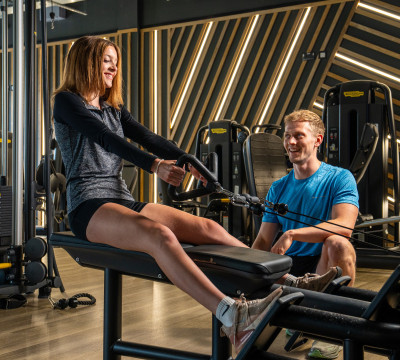
● Using resistance machines
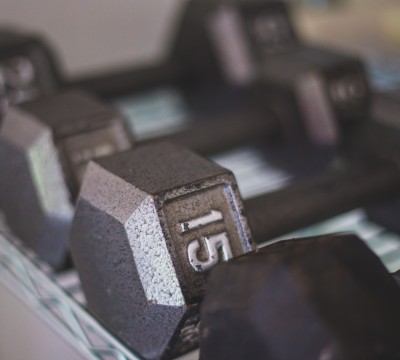
● Exercising with dumbbells or kettlebells
● Resistance-band exercises
● Bodyweight movements
● A strength-based fitness class
If you're new to it, start at a level that feels comfortable and build gradually. Asking a member of the gym team for guidance can also help you feel more confident using equipment and finding exercises that work for you.
Move for how you feel, not just how you look
It's easy for conversations about fitness during menopause to become focused on weight or changes to body shape.
But there are many other reasons to move.
Feeling stronger.
Getting some headspace.
Having an hour for yourself.
Enjoying a class with other people.
Building confidence.
Getting outdoors for a walk.
Or simply doing something that leaves you feeling better than when you started.
Your reason for moving doesn't have to revolve around changing your body.
Some days, doing less is still doing something
Menopause isn't necessarily the time to constantly push harder.
Your energy may change from day to day, particularly if you're experiencing poor sleep, fatigue or other symptoms.
Listening to your body matters.
If your usual workout feels too much, adapting it isn't giving up. You could reduce the intensity, take more recovery time, choose a different activity or simply go for a walk instead.
Movement should support your wellbeing, not become another source of pressure.
Finding movement you actually enjoy
The best type of exercise is often the one you genuinely want to come back to.
For one person, that might be lifting weights.
For somebody else, it could be a group exercise class, swimming, cycling or meeting a friend for a walk.
And your preferences can change.
Trying something new can be a good way to rediscover what makes you feel strong, confident and energised.
At Lifestyle Fitness, that could mean experimenting with different parts of the gym, trying a class you've never done before, spending some time strength training or simply giving yourself permission to have an easier session when you need one.
Your wellbeing isn't just physical
Menopause can affect mental wellbeing too.
Changes in mood, anxiety, concentration and sleep can all influence work, relationships and everyday life.
Movement can form part of looking after your overall wellbeing, but it isn't about forcing yourself to exercise when you're struggling.
Rest matters too.
Talk to the people around you. Ask for support. Give yourself space when you need it.
And if symptoms are affecting your everyday life, consider speaking to your GP or another healthcare professional about the support available to you.
Talk about it
For generations, menopause wasn't something women were encouraged to talk openly about.
Thankfully, that's changing.
Talking to friends, family members or colleagues can help make the experience feel less isolating. You might discover that somebody close to you has experienced something similar, or simply find someone willing to listen.
The same applies in fitness spaces.
You shouldn't feel as though you have to train a particular way, hide how you're feeling or compare yourself with the person next to you.
Your body is yours. Your experience is yours. And your routine can be too.
There's no right way to experience menopause, or to stay active through it
Menopause isn't something you need to fear, hide or simply push through.
It's another stage of life, and every woman's experience will be different.
Your energy might change.
Your routine might change.
Your body might change.
But movement can continue to be something that's yours, whether that's lifting weights, taking a class, going for a swim, walking with a friend or simply moving in whatever way feels good that day.
At Lifestyle Fitness, we want to help women feel comfortable and confident staying active through every stage of life.
Because fitness isn't about doing what you've always done.
It's about finding what works for you, right now.